The Tu-jr1856paz oven requires a disciplined approach to temperature management. This discussion centers on confirming model-specific guidance, verifying default interface settings, and aligning dial positions with calibrated references to minimize deviation. Temperature verification must be continuous and logged, incorporating a calibrated warm-up profile and controlled preheating to reduce ramp variance. Sensor drift, control latency, and display calibration demand compensation, all while maintaining safety and traceability; the implications extend beyond simple settings, inviting further scrutiny.
How to Set the Right Temp on the Tu-jr1856paz
To determine the correct temperature for the Tu-jr1856paz, consult the appliance’s user manual and model-specific guidelines, then verify default settings through the control interface. The procedure emphasizes objective assessment and reproducible results.
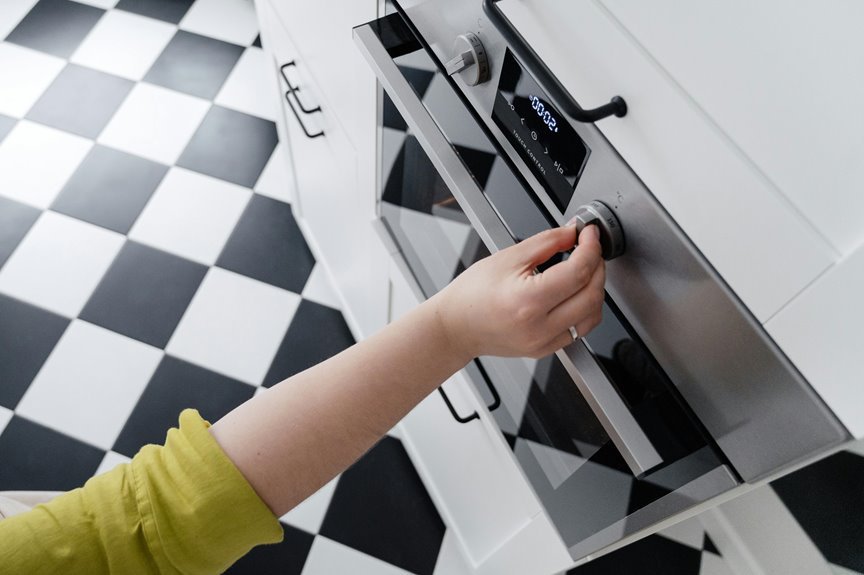
In practice, precise steps include adjusting dial positions to align with calibrated references and performing oven calibration to minimize deviation, ensuring consistent baking accuracy.
How to Monitor Temperature During Baking and Roasting
Effective monitoring of oven temperature during baking and roasting relies on continuous verification against calibrated references and timely detection of deviations. The process emphasizes temperature calibration protocols and systematic data logging to ensure traceability. Accurate results depend on standardized oven placement within the kitchen layout, minimizing heat leakage and thermal gradients that could skew readings. Continuous verification enables reliable, repeatable outcomes.
Troubleshooting Common Temp Quirks With Tu-jr1856paz
In the context of maintaining consistent bake and roast outcomes, the Tu-jr1856paz model often exhibits small, reproducible temperature quirks that warrant targeted diagnostic checks. Analyses focus on sensor drift, control loop latency, and display calibration. Practical steps include oven calibration verification, compensating for measured offsets, and acknowledging feature limitations that may constrain auto-tuning and third-party probe integration.
Preheating Mastery and Practical Time-Savers for Consistent Results
Preheating efficiency hinges on quantifiable timing and stabilization metrics, with the Tu-jr1856paz requiring a calibrated warm-up profile to minimize temperature ramp variance.
The analysis emphasizes controlled preheat routines, repeatable oven calibration procedures, and stepwise heat ramp monitoring.
Practical time-savers include locating optimal preheat thresholds and documenting deviations, ensuring consistent results while preserving freedom to adjust within set safety constraints.
Frequently Asked Questions
Does the Oven Retain Learned Temperatures Across Power Outages?
The oven does not reliably retain learned temperatures after a power fade; calibration data may be lost. In technical terms, ongoing oven calibration routines must be reinitiated post-outage to ensure consistent performance and accurate temperature control.
Can I Convert Celsius to Fahrenheit for This Model?
A notable stat: 1 in 3 users seek simplicity, a rhythm in data. The model’s convertibility questions show limited Celsius-to-Fahrenheit options; thermometer accuracy remains variable, with calibration recommendations. Conversion feasibility exists, but verify settings before use.
How Accurate Is the Oven’s Built-In Thermometer?
The oven’s built-in thermometer exhibits moderate accuracy with observable temperature drift over time. Calibration procedures reveal that oven calibration is necessary for precise baking, as temperature drift can compound across cycles, affecting consistency and overall performance.
Do Accessories Affect Temperature Stability During Use?
Accessories modestly influence heat flow; their impact on temperature stability is detectable but limited, depending on fit, insulation, and airflow. When fitted well, accessory impact remains minor, preserving overall temperature stability under typical cooking conditions.
Is There a Suggested Rack Position for Even Temps?
A recommended rack position for even temperatures is the middle rack, which promotes temperature stability. This arrangement minimizes heat bias, enabling an even rack performance; it reduces hot spots and supports balanced airflow for consistent cooking results.
Conclusion
The Tu-jr1856paz temperature process persists with disciplined, diagnostic deployment. Precision paired with procedural prudence produces predictable, repeatable results: calibrated cues, controlled preheat, and verified readings. Methodical measurement minimizes drift, latency, and display distortion while documentation delivers traceable outcomes. Sensor signals synchronize with settings, and systematic logging supports audits and improvements. Steady sequencing, steady state, and steady scrutiny foster steadfast baking outcomes, showcasing structured science over surges of spontaneity.