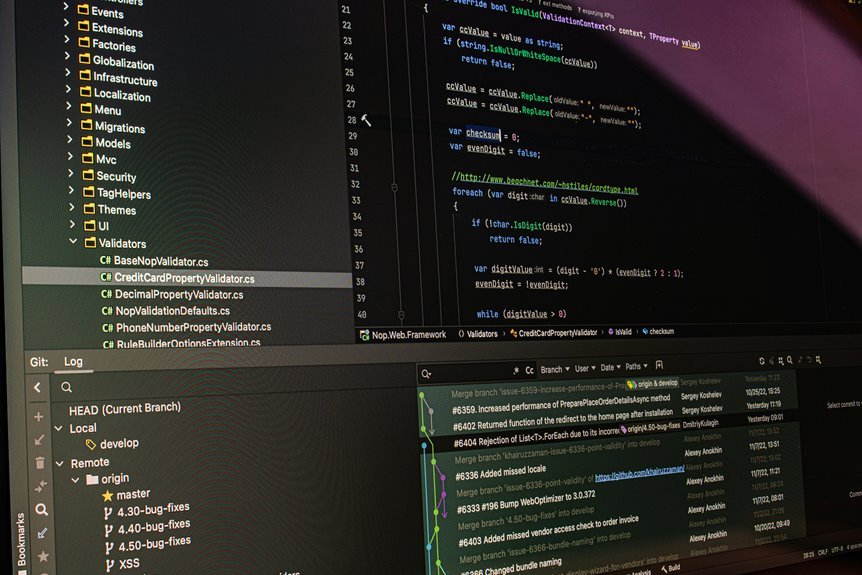
Locating the ko44.e3op model requires a methodical scan of metadata-rich repositories and catalogs that emphasize provenance, licensing, and version histories. The process involves cross-platform verification to confirm authenticity and compatibility with the intended workflow. Analysts should assess model specifications, governance, and reproducibility requirements before selecting sources. The approach preserves thorough documentation of queries and provenance, guiding the decision while leaving open questions about fit and integration for the next steps.
What Is the ko44.e3op Model and Why It Matters
The ko44.e3op model is a computational framework used to simulate and analyze interactions within a specified system, enabling researchers to predict outcomes under varying conditions. It structures causal relationships, parameter sensitivity, and scenario testing, supporting transparent assessment of reliability.
Its ethical implications demand scrutiny of data provenance, bias, and governance, ensuring responsible use while preserving methodological freedom and accountability across interdisciplinary applications.
Where to Look: Common Repositories and Search Strategies
Researchers seeking the ko44.e3op model can begin with a survey of major repositories that host computational models, simulation frameworks, and related datasets. These sources support reproducible exploration and cross-domain comparison. Key repositories favor search strategies emphasizing metadata, versioning, and licensing. Analysts should triangulate results across platforms, verify provenance, and document queries to improve discoverability of the ko44.e3op model.
How to Verify Authenticity and Fit for Your Project
Assessing authenticity and alignment with project needs requires a structured approach: verify provenance and licensing, examine version histories and provenance trails, and evaluate the model’s specifications against the intended use-case requirements.
Discussion ideas: Model verification and Project fit criteria inform risk, reproducibility, and governance. The analysis remains concise, sourced, and objective, guiding freedom-oriented decision-making without overcommitment or speculation.
How to Manage and Reproduce Findings Across Workflows
Efficiently managing and reproducing findings across diverse workflows requires disciplined documentation, standardized provenance, and interoperable tooling.
Analysts emphasize finding methods that trace data through stages, enabling audit trails, and supporting citation practices.
Data provenance underpins cross-system integrity, while addressing reproducibility challenges through modular pipelines, clear metadata, and verifiable experiments.
This approach promotes freedom by enabling transparent, interchangeable, and robust scientific workflows.
Frequently Asked Questions
Is ko44.e3op Compatible With My Existing ML Framework?
Yes, ko44.e3op’s compatibility hinges on framework versions and dependencies; licensing constraints and deployment considerations must be evaluated. The analysis notes potential GPL/Apache terms, runtime adapters, and hardware acceleration flags relevant to any freedom-seeking integration.
What Are Licensing and Usage Restrictions for ko44.e3op?
ko44.e3op licensing terms restrict certain distributions; usage rights vary by jurisdiction. The model licensing governs distribution constraints, privacy safeguards, and data handling policies. It is analyzed against terms, ensuring transparent compliance and respect for user freedom.
Can ko44.e3op Be Fine-Tuned on Domain-Specific Data?
Yes, ko44.e3op can be fine-tuned on domain-specific data, but practitioners should assess fine tuning data quality, domain adaptation needs, privacy concerns, and deployment pitfalls, with citations to comparable models and reputable research sources.
How Does ko44.e3op Handle Privacy and Data Security?
ko44.e3op employs robust privacy practices, data governance protocols, and security controls to protect user information while preserving model integrity. Analytical evaluations emphasize compliance, auditable processes, and continuous monitoring for a transparent, freedom-friendly security posture.
What Are Common Failure Modes When Deploying ko44.e3op?
Common deployment pitfalls include brittle integration, inadequate monitoring, and latency spikes, with data governance considerations emphasizing access controls and audit trails; these factors erode reliability, requiring rigorous testing, documentation, and transparent risk assessment to sustain model deployment.
Conclusion
The ko44.e3op model represents a convergence of ambition and risk. In a landscape of open catalogs and strict licenses, discovery versus assurance sits in tension: speed to access clashes with the rigor of provenance. Juxtaposing transparent metadata with opaque dependencies highlights governance as the fulcrum. A disciplined, cross-platform verification process—documented queries, provenance trails, reproducible workflows—balances curiosity with compliance, enabling robust adoption without sacrificing accountability. Thus, search, verify, and document; lest potential brilliance be ungoverned.