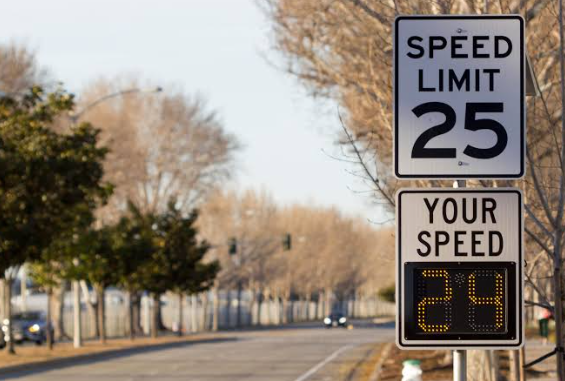
Improving road safety requires more than displaying speed limits. Drivers also need timely reminders that help them recognize when they are traveling too fast. A radar speed sign with driver feedback provides real-time vehicle speed information through a digital display, allowing motorists to see their current speed and respond accordingly. This technology offers a practical solution for traffic authorities, municipalities, and road safety professionals seeking to encourage responsible driving in areas where speed awareness is particularly important.
Understanding Radar Speed Signs with Driver Feedback
A radar speed sign is an electronic traffic device that detects approaching vehicles and displays their measured speed. It uses Doppler radar technology to calculate vehicle movement and communicates the result through a high-visibility LED screen.
Unlike traditional signs that display only a fixed speed limit, driver feedback signs provide information specific to each approaching vehicle. This makes the message more relevant and can encourage motorists to adjust their speed before entering sensitive road sections.
Key Features of Modern Radar Speed Signs
1. Reliable Radar Detection
Accurate speed detection is essential for providing useful feedback. The Sinowatcher model uses 24.125 GHz Doppler radar technology and supports a detected speed range of 10–250 km/h. Its standard detection distance is 100 meters, with optional configurations of 150 and 200 meters.
These capabilities make the equipment suitable for different road environments, depending on the project’s requirements and installation conditions.
2. Dual-Color LED Display
A clear display helps drivers understand speed information quickly. The featured model uses red and green LED digits to communicate driving conditions.
When a vehicle travels within the configured speed threshold, the display shows green feedback. If the vehicle exceeds that threshold, the display changes to red and activates a warning feedback symbol. This visual approach helps motorists recognize their speed status without needing to interpret complicated messages.
3. Flexible Power Supply
Power availability can differ between urban roads, highways, and remote locations. Modern radar speed signs can support solar-powered DC operation, external DC power, and battery backup, depending on the selected configuration.
Solar power can be particularly useful where conventional electrical connections are difficult to install. It may also help reduce wiring requirements and simplify deployment.
4. Adjustable Speed Thresholds and Schedules
Different locations have different speed restrictions and traffic patterns. Adjustable speed thresholds allow authorized personnel to configure the sign according to local requirements.
Operating schedules and feedback icon settings can also be adjusted through the local interface. This flexibility is useful for school zones and other locations where traffic management requirements may change during the day.
5. Traffic Data Logging
Some driver feedback systems can record vehicle speed information for later review. Traffic managers can use these records to identify speed patterns, understand traffic behavior, and evaluate whether additional safety measures may be needed.
Data logging adds value beyond the immediate driver-facing display by supporting traffic monitoring and planning.
Common Applications
Radar speed signs can support road safety initiatives in several environments:
- School zones: Remind motorists to observe reduced speed limits near schools and pedestrian crossings.
- Residential streets: Encourage responsible driving where pedestrians, cyclists, and local traffic share the road.
- Construction zones: Provide speed reminders near roadworks, temporary lane changes, and active work areas.
- Highway ramps: Help drivers recognize their speed when approaching changing road conditions.
- Temporary traffic projects: Portable configurations can be relocated as project requirements change.
The right installation depends on traffic volume, road layout, visibility, and local regulations.
Benefits for Traffic Management
The main advantage of driver feedback technology is its ability to communicate directly with approaching motorists. Instead of simply reminding everyone of a fixed speed limit, it displays the speed of each detected vehicle.
This immediate information may encourage drivers to reduce excessive speed voluntarily. When combined with conventional road signs, warning lights, pedestrian crossings, and appropriate enforcement measures, radar speed signs can contribute to a broader traffic safety strategy.
However, these systems should support rather than replace established traffic enforcement and road engineering measures.
Choosing the Right Equipment
Before purchasing a radar speed sign, project managers should consider detection distance, speed measurement range, display dimensions, power options, mounting requirements, and data logging capabilities. Outdoor durability, maintenance needs, technical support, and spare parts availability are also important factors.
Selecting equipment that matches the specific road environment can improve installation effectiveness and long-term operational value.
Conclusion
A radar speed sign with driver feedback combines radar detection and clear visual communication to improve driver awareness. With adjustable settings, dual-color LED displays, flexible power options, and traffic data logging, these systems can support a wide range of road safety applications.
For traffic authorities and project planners, choosing the appropriate configuration is an important step toward encouraging responsible driving and creating safer road environments.