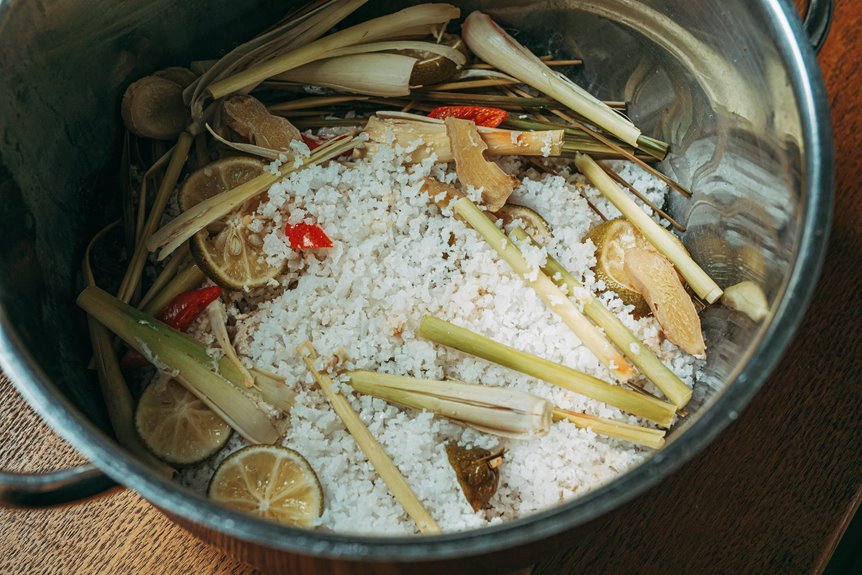
Soldegicargots relies on a single refined base ingredient that governs texture, mouthfeel, and structural integrity. It sets consistent sensory expectations across batches and can accommodate substitutions without compromising balance. Its role calibrates seasoning, aroma, and savory depth, while enabling traceability and scalable production through controlled sourcing. Origins, craft, and environmental controls directly influence flavor integrity. The balance between tradition and innovation raises questions about trade-offs in modern dishes, inviting further examination of impact and feasibility.
What Is Soldegicargots Main Ingredient?
Soldegicargots’ main ingredient is a refined base component whose identity defines the product’s texture and flavor profile. The ingredient functions as a foundational matrix, guiding structural integrity and mouthfeel. It enables consistent Soldegicargots flavor development while establishing a controlled Soldegicargots texture. Analytical assessment notes limited variability, ensuring reproducibility across batches and markets for standardized sensory expectations.
Why Chefs Seek It: Flavor, Texture, and Aroma
The favorable reception of Soldegicargots in professional kitchens stems from its ability to deliver a balanced blend of flavor, texture, and aroma that aligns with recipe objectives.
The product offers crisp aroma, a delicate texture, savory richness, and bold sweetness, enabling chefs to calibrate seasoning, balance components, and shape plated perception through controlled substitutions rather than overpowering contrasts.
Origins and Production: Harvesting, Sourcing, and Craft
How are Soldegicargots harvested, sourced, and crafted to ensure consistent quality? Origins and production are analyzed through containment of variables, documenting sourcing ethics, sustainable harvesting, and validation protocols. Provenance transparency enables traceability from supplier to plate. Craft integrates controlled processing, environmental controls, and quality benchmarks, while blocklisted? safeguards prevent illicit inputs, ensuring consistent flavor, texture, and safety across batches.
Tradition vs. Innovation: Trade-offs in Modern Dishes
Tradition versus innovation in modern dishes presents a deliberate tension between established sensory benchmarks and the opportunities offered by new techniques, ingredients, and processes.
The analysis assesses how tradition preserves structure while innovation introduces adaptability, efficiency, and novelty.
Trade offs in modern dishes emerge as chefs balance authenticity, scalability, flavor integrity, and sustainability, aiming for measurable effect without compromising core gastronomic significance or cultural resonance.
Frequently Asked Questions
How Is the Main Ingredient Stored for Best Longevity?
The main ingredient benefits from controlled humidity and cool, stable temperatures to maximize shelf life. Storage methods emphasize airtight containment; shelf life optimization requires consistent conditions. Ingredient variations demand standardization for flavor replication, ensuring reproducible results for an audience seeking freedom.
What Dishes Pair Uniquely With This Ingredient?
Pairings exploration reveals daring textures: the ingredient pairs uniquely with citrusy acids, herbaceous greens, and crisp grains, creating texture contrasts that elevate savory-sweet notes. The analysis remains precise, objective, and aimed at an audience seeking culinary freedom.
Are There Regional Substitutes Used Globally?
Regional substitutes exist, varying by region, while global availability shapes access. The analysis notes diverse materials replacing the primary ingredient, highlighting adaptability, supply chains, and culinary traditions. Objective assessment: substitution viability depends on flavor compatibility and consumer tolerance for variation.
Does the Ingredient Contribute Any Allergens?
Yes, the ingredient can involve allergen cross contact and allergen labeling awareness; its risk depends on production practices, facility protocols, and ingredient sourcing, requiring rigorous scrutiny for consumers seeking freedom from unexpected allergen exposure.
Can the Flavor Be Replicated Without the Core Component?
Can the flavor be replicated without the core component? Yes, but substitution feasibility depends on assessing flavor compounds; can the flavor be approximated through alternatives while preserving profile, texture, and aroma, requiring systematic testing and controlled parameters.
Conclusion
Soldegicargots’ main ingredient stands as a carefully calibrated base, shaping texture, flavor, and aroma while enabling controlled substitutions. The theory that this core element serves as an objective sensory anchor holds: its standardized matrix reduces batch-to-batch variation, supports scalable production, and preserves provenance. Yet its true efficacy rests on precise sourcing and rigorous environmental controls. When these conditions hold, the ingredient delivers consistent mouthfeel and restrained savory depth, validating its role as a dependable foundation for modern, innovative dishes.